Author: ADR

  • But Does Education Alone Stop Rape?

    But Does Education Alone Stop Rape?

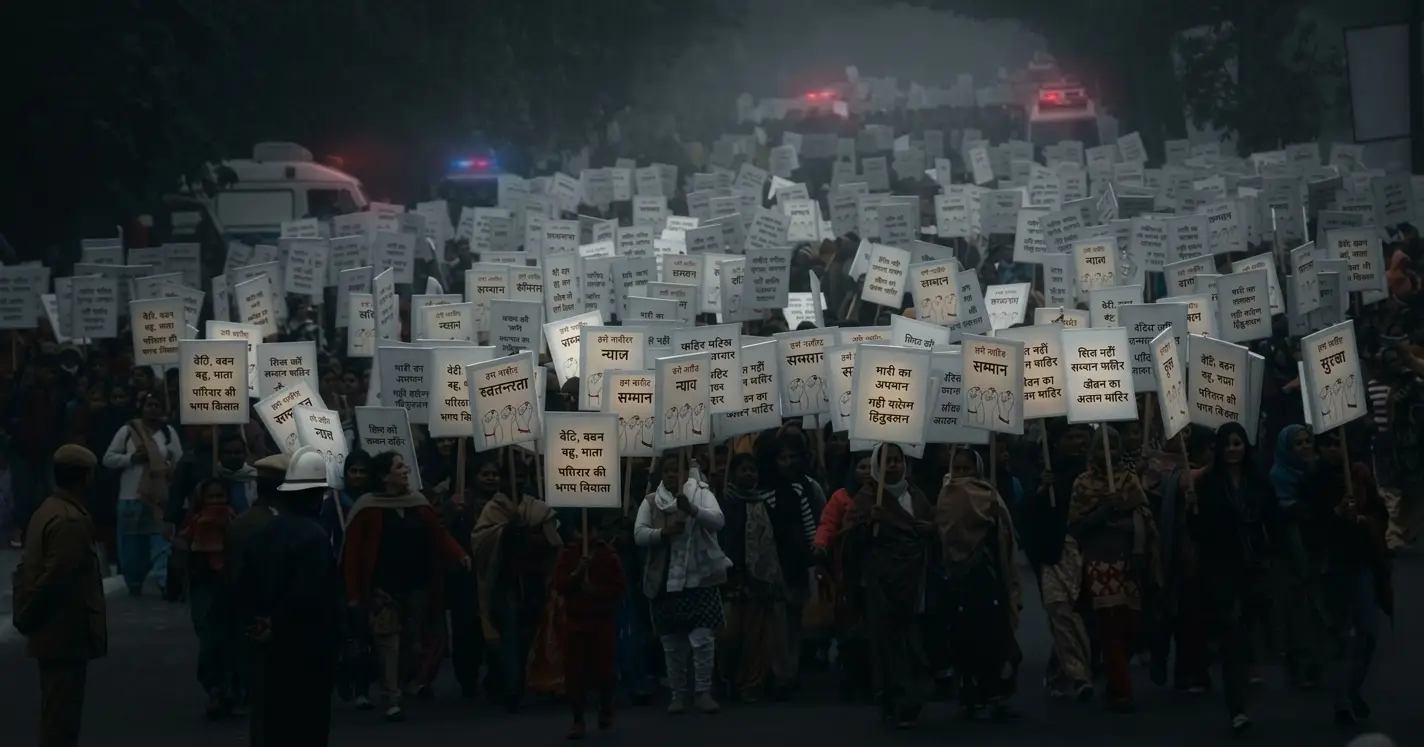
    At a protest in Delhi against rising cases of sexual violence, one hoarding read: “Educate your son before you send your daughter outside.” It’s a message repeated in every awareness campaign and every op-ed after a case makes headlines.

    Before I go further, my heartfelt condolences to the victim and her family. No one should ever have to go through this.

    1: Does Literacy Actually Prevent Rape?

    Short answer: No — not on its own.

    • Countries with near-universal literacy do not report anywhere close to zero cases of sexual violence.
    • What differs between countries isn’t the underlying rate of violence — it’s how completely each country’s data captures it:
      • Whether male victims are legally counted
      • Whether marital rape is recognized
      • How much of it gets reported at all
    • In India, offenders appear across every education level — graduates, under-matric, and illiterate offenders all show up in the data. An “educated” offender is not a contradiction.

    2: What the Poster Leaves Out — Rape Happens to Boys Too

    The “educate your son, protect your daughter” framing quietly assumes only girls are victims. The data — global and Indian — doesn’t support that assumption.

     Data PointSource
    USA (men)1 in 6 men (16.9%) experienced contact sexual violence in their lifetimeCDC NISVS
    USA (men, broader)~1 in 3 men experienced sexual violence, physical violence, or stalking by a partnerCDC
    India (children, both genders)53% of surveyed children reported facing sexual abuse — of victims, 53% were boys2007 MWCD/UNICEF study
    India (reporting)70% of abused children, regardless of gender, never told anyone2007 MWCD/UNICEF study

    Why India has almost no official data on adult male rape victims — it’s a legal gap, not just a cultural one:

    • Section 63, Bharatiya Nyaya Sanhita (BNS) — replaced IPC Section 375 in 2024 — defines rape strictly as man against woman. Only a woman can legally be a “victim”; only a man can be the accused.
    • Male and transgender victims fall entirely outside this definition.
    • It’s gotten narrower, not better: the old IPC’s Section 377 was sometimes used (imperfectly) to prosecute male sexual assault. The BNS removed Section 377 entirely, with no replacement for adult male/transgender victims.
    • Net result: male rape currently has no dedicated legal recognition in Indian criminal law.

    Why the silence on both sides?

    • A girl often fears being called “characterless”
    • A boy often fears being seen as “not man enough”
    • Different fears → same outcome: silence, and a system that wasn’t built to fully hear either of them

    3: What Actually Drives Sexual Violence (Not What We Assume)

    Common AssumptionWhat the Data Actually Shows
    Rape is mostly committed by strangers94–97% of cases involve someone known to the victim — relative, neighbour, friend
    Alcohol is the main causeAlcohol is a factor in a minority of cases — most reported assaults happen fully sober
    The legal system delivers justiceConviction rates hover around 27–28%; cases often take years
    Porn has no real-world effectKids now reach explicit content years before any school conversation on consent — creating a gap with no framework

    4: Does Development = Fewer Cases? (No — and Here’s Why)

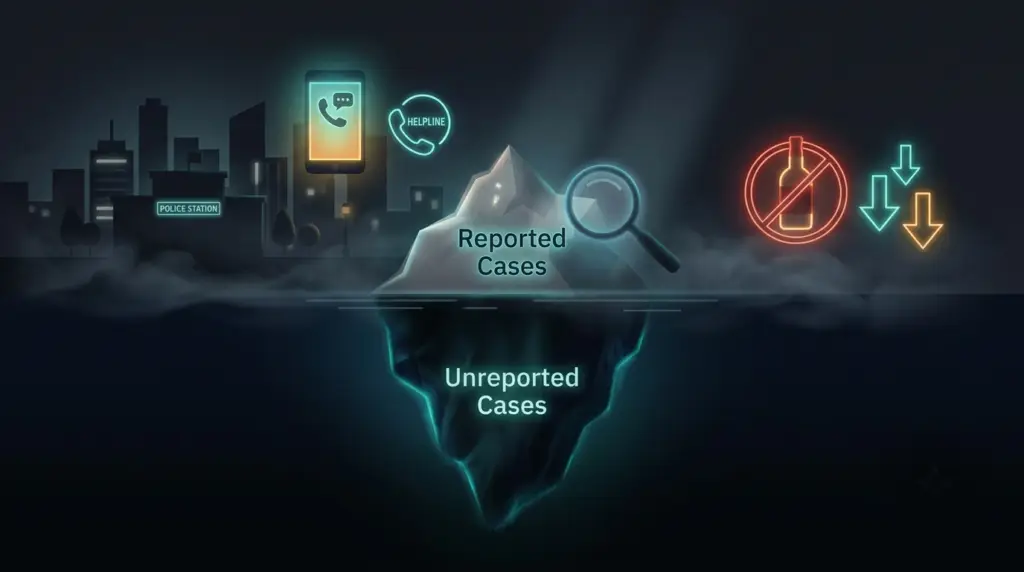
    • More “developed” states often show more reported cases, not fewer — because better awareness and police access improve reporting, not necessarily the underlying rate.
    • A low case count is not proof of safety — it can just mean worse reporting.
    • Development also introduces new risks: dating-app harassment, drink-spiking, workplace harassment, hostel ragging (which affects boys as much as girls).

    One policy that actually worked — Bihar’s 2016 alcohol ban:

    • 3.6 percentage-point decrease in reported sexual violence
    • 4.6 percentage-point decrease in emotional violence
    • 37% drop in domestic violence cases (IPC 498A) in the years after the ban (Source: Lancet Regional Health – Southeast Asia / NCRB-based reporting)
    5: What Should Actually Be Taught — And To Whom

    • Teach boys, starting well before Class 12:
    • Consent is an active yes — not the absence of a no
    • Masculinity built on control (not protection) is a root cause here
    • Boys can be victims too — it is never their shame to carry
    • Being intoxicated, or having paid for a date, is never consent
    • Teach both boys and girls, from an early age:
    • Body autonomy — “good touch, bad touch,” taught before adolescence
    • Digital safety — sextortion targets boys as much as girls
    • Bystander responsibility — don’t laugh along when a friend crosses a line
    • Teach girls — not just for safety, but for power:
    • Financial independence is one of the strongest protections against staying in an abusive situation
    • Practical legal knowledge — helplines, right to file a Zero FIR at any station
    • Self-defence as a last resort, not the first line of defence
    • Teach parents:
    • Teaching a son to “behave outside” matters far less than teaching him to behave inside the house
    • Since most offenders are known to the victim, what a child witnesses at home shapes far more than any outside lecture

    Real-World Proof: Kenya Tried This, and It Worked

    This isn’t theoretical. A country has actually run this exact model — gender-specific, consent-based education for both boys and girls — and measured the results.

    Program: IMpower, run by the NGO No Means No Worldwide, rolled out across schools in Nairobi, Kenya, starting 2010.

    What it taught:

    AudienceCurriculum
    GirlsConsent, confidence, bodily autonomy, physical self-defence
    BoysRespect for women, challenging rape myths, positive masculinity, how to intervene as a bystander

    Measured results:

    • 51% decrease in reported rape incidents among trainees who completed the program
    • ~50% of girls who completed the course personally stopped an attempted rape within a year of finishing it
    • Results were strong enough that the model was later replicated in Malawi (with UNICEF support) and Uganda

    6: What Could Actually Fix This

    SolutionWhat It Would Do
    Gender-neutral rape lawRecommended by the Justice Verma Committee (2012) — still not implemented. UK, Canada, Australia already have this.
    Safety-by-designWell-lit public spaces, CCTV, visible facilities, no blind spots — in schools, hostels, bus stops
    Faster courts + crisis centersCombine medical, police, and counselling support within hours — forensic evidence has a short window
    Alcohol control + economic access

    What I Think: “You Can’t Expect Justice From a System Where the Policymakers Are the Accused”

    Every solution in Step 6 — gender-neutral law, faster courts, safety-by-design — depends on one thing: a legislature willing to actually pass and fund it. That’s worth questioning, because the people writing India’s laws are not a clean sample.

    The numbers, from the Association for Democratic Reforms (ADR) — India’s own poll-watchdog, built specifically to track candidates’ sworn criminal affidavits:

    Lok Sabha (Lower House)% of winning MPs with any declared criminal case% with serious criminal cases (incl. rape, murder, kidnapping, crimes against women)
    200423%—
    200930%14%
    201434%21%
    201943%29%
    202446% (251 of 543 MPs)31% (170 of 543 MPs)

    That’s a 124% rise in MPs with serious criminal cases since 2009 — in just three election cycles.

    Why I Don’t Expect This Soon — The Education Math Doesn’t Support It Either

    Everything in Step 5 and the Kenya example above depends on one resource: a functioning school system reaching every child. India’s own numbers suggest that’s still a long way off — not because the goal is wrong, but because the money and the literacy base needed to get there aren’t in place.

    The illiteracy gap is still enormous:

    MetricFigureSource
    Overall literacy rate (age 7+)                                                                81.1%PLFS 2025
    Rural female literacy                                                                70.3%PLFS 2025
    Urban vs. rural literacy gap                                               11.6 percentage pointsPLFS 2025
    Estimated illiterate population                      Roughly 240–250 million people — on the scale of the entire                 population of Indonesia, the world’s 4th most populous countryCalculated from PLFS 2025 literacy rate applied to India’s population aged 7+

    And the money that is allocated often doesn’t even reach schools on time:

    • Samagra Shiksha Abhiyan (India’s largest school education scheme): only 54.9% of its 2025–26 budget had been utilised with just six days left in the financial year
    • PM-USHA (the scheme funding state public universities): averaged just 16% budget utilisation across 2022–2025, per PRS Legislative Research
    • ULLAS, India’s own adult-literacy programme — the scheme directly meant to fix the illiteracy numbers above — has had its budget flat at ₹160 crore for four straight years (2024–25 to 2026–27), which a parliamentary panel itself called “inadequate” given the scale of adult illiteracy still in the country

    Put together, this is a double failure, not a single one: the government has never funded education to its own promised target in almost 60 years of promising it, and a meaningful share of even the reduced amount it does allocate goes unspent or arrives too late to use. A country that can’t fully spend ₹12,467 crore meant for its largest school scheme, and funds adult literacy at a flat rate while over 200 million adults remain unable to read, is not currently positioned to deliver Kenya-style consent education at national scale — regardless of how badly it’s needed. That’s the honest, unglamorous reason this is likely to take far longer than anyone wants to admit.

    The Rewrite

    That Delhi hoarding wasn’t wrong — it was just incomplete.

    Educate your son to understand what “no” means. Educate your daughter — and your son — that they’re allowed to report it when “no” is ignored. Educate the system to actually follow through when they do.

    A safe India isn’t one where women stay indoors after dark. It’s one where both your daughter and your son can walk outside at 10 PM and come home safe — and where the law recognizes it, whoever the victim is.

    Sources

    https://vawnet.org/material/national-intimate-partner-and-sexual-violence-survey-20232024-sexual-violence-data-brief

    https://theleaflet.in/equality/gender-neutral-laws-for-sexual-offences-a-gap-that-has-not-been-bridged

    https://www.ibanet.org/new-criminal-laws-legalise-male-rape-in-India

    https://www.aljazeera.com/news/2007/4/9/child-abuse-widespread-in-india

    https://shethepeople.tv/news/94-percent-offender-known-rape-survivor-ncrb-data

    https://www.jurist.org/news/2022/08/india-registers-13-percent-increase-in-rape-in-2021-reveals-government-report/

    https://businesstoday.in/india/story/bihars-alcohol-ban-prevented-21-lakh-cases-of-intimate-partner-violence-lancet-study-430939-2024-05-26

    https://scroll.in/article/976919/scroll_in

    https://wol.iza.org/news/no-means-no-how-consent-classes-in-kenya-reduced-incidents-of-rape-by-51

    https://thewire.in/politics/151-mps-mlas-face-charges-of-crimes-against-women-bjp-highest-among-parties-west-bengal-in-states

    https://www.outlookindia.com/amp/story/national/lok-sabha-elections-in-india-2024-results-mp-criminal-law-records-rape-charges-winning-candidates-adr

    https://www.adrindia.org/node/96376

    https://scroll.in/article/1078655/scroll_in

    https://dataforindia.com/literacy-in-india/

    https://anantamias.com/education-expenditure-gdp/

    https://news.careers360.com/under-55pc-samagra-shiksha-abhiyan-midday-meal-budget-spent-education-ministry-ncert-books-class-9-12-nipun-bharat-mission-panel

    https://www.loansjagat.com/news/neps-6-gdp-education-target-still-unmet-parliament-panel-seeks-8-10-annual-funding-hike

  • How Exercise Rewires Your Brain: The Science Behind Sharper Memory and Mental Clarity

    How Exercise Rewires Your Brain: The Science Behind Sharper Memory and Mental Clarity

    Why a simple habit like walking might do more for your focus, memory, and mental fog than you think  backed by real research.
    By Aditya Dev Ranjan

    The Study That Changed How Scientists Think About Exercise and Memory

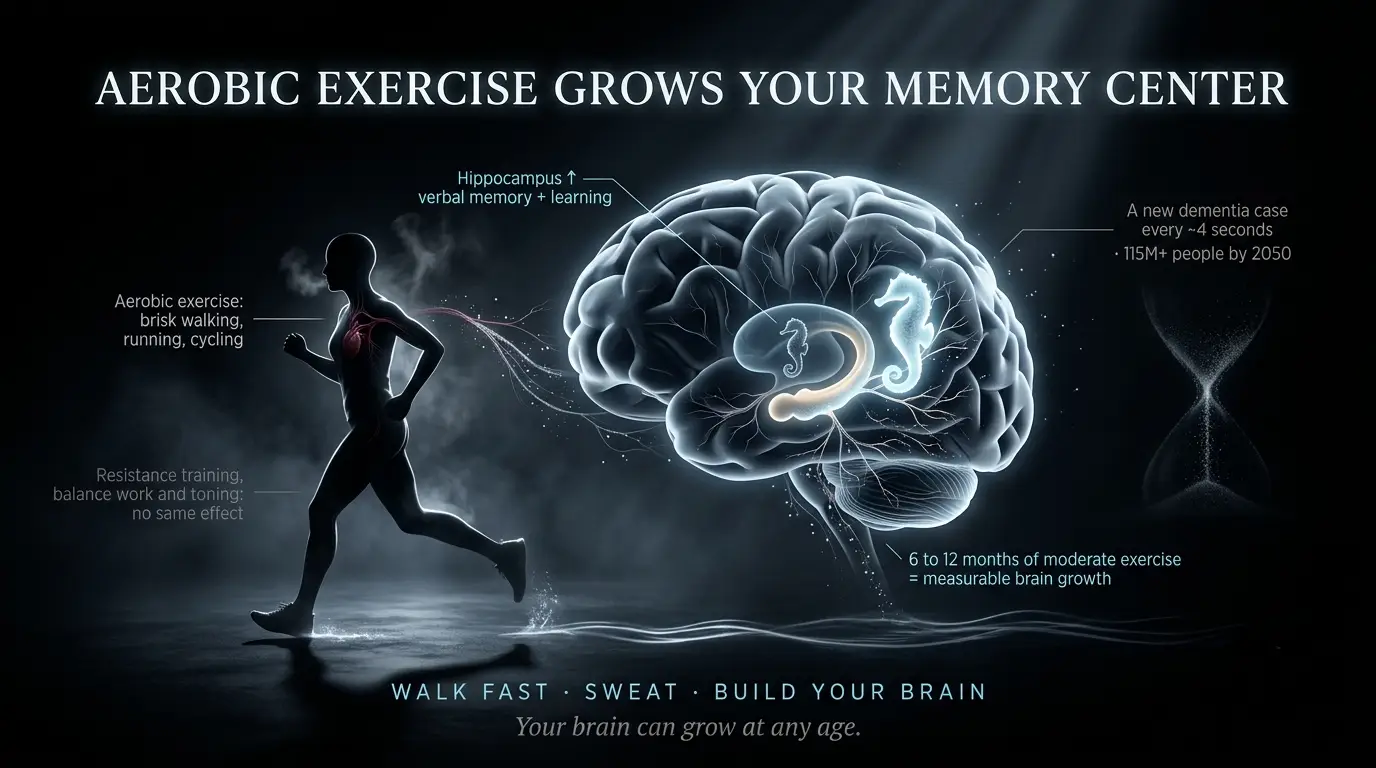
    • Aerobic exercise increases the size of the hippocampus, the brain region responsible for verbal memory and learning.
    • Resistance training, balance exercises, and muscle toning did not produce the same effect.
    • The benefit appears to be specific to aerobic activity.
    • A new case of dementia is identified roughly every four seconds worldwide.
    • More than 115 million people could be living with dementia globally by 2050.
    • Regular activities like brisk walking can lead to measurable changes in the brain.
    • Six months to one year of regular, moderate-intensity exercise is linked to increased volume in specific brain regions.
    • These changes are physical and measurable, not just improvements in mood or energy.

    What’s Actually Happening Inside Your Brain

    This isn’t just correlation — there’s a documented biological mechanism behind it. A neuroscience review on
    exercise and brain function outlines several pathways through which physical activity directly changes brain
    chemistry and structure:
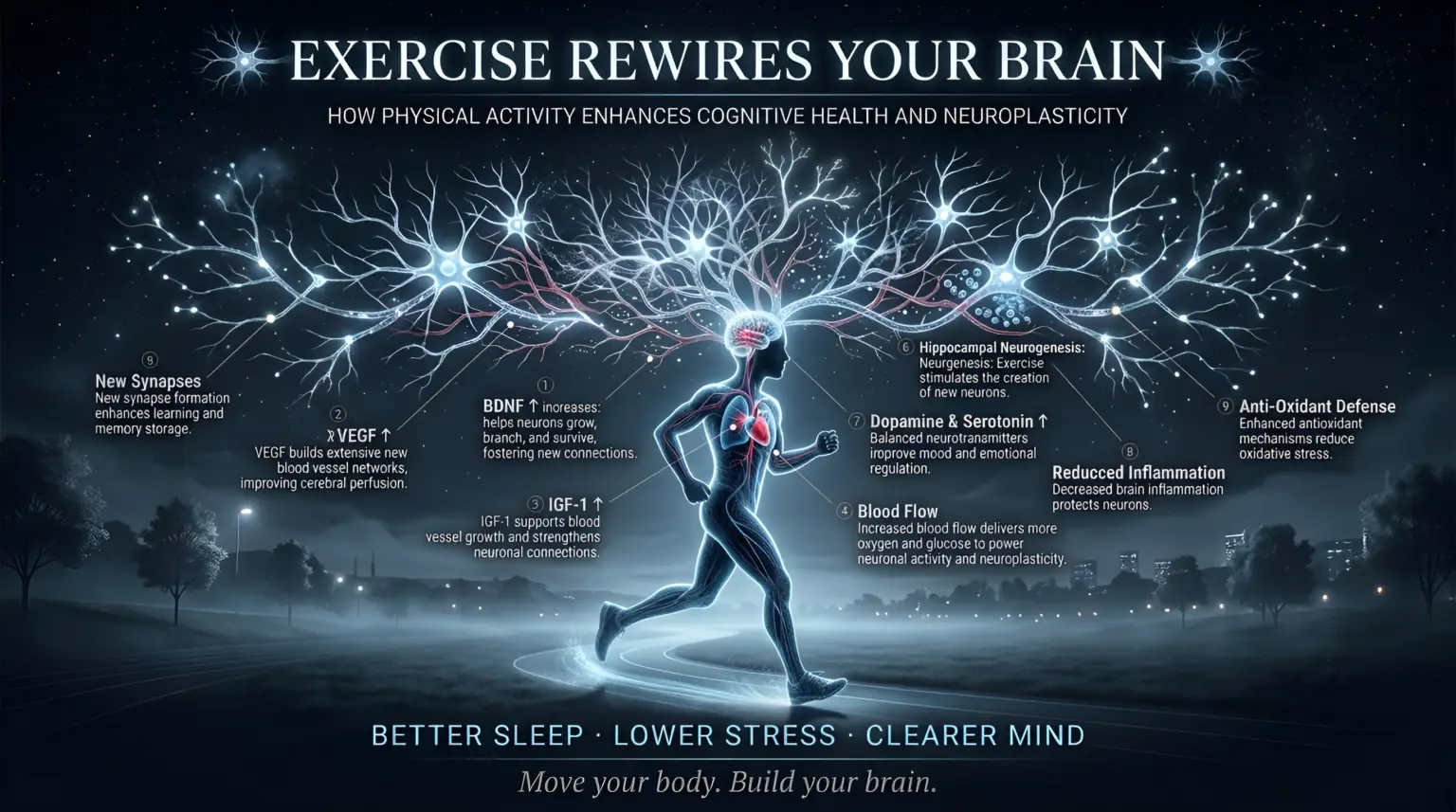
    ● Brain-derived neurotrophic factor (BDNF) rises with exercise, which supports the growth and survival
    of neurons.
    ● Vascular endothelial growth factor (VEGF) drives the growth of new blood vessels in the brain,
    improving blood supply.
    ● Insulin-like growth factor (IGF-1) plays a role in exercise-driven blood vessel growth in brain tissue as
    well.
    ● Because the brain runs on oxygen and glucose, better blood flow through increased capillary density
    directly supports neuroplasticity — the brain’s ability to form and reorganize connections.

    Put simply: exercise doesn’t just distract you from stress or tire you out enough to sleep better (though it does both of those too). It appears to trigger a cascade of biochemical changes that build a brain with more capacity to learn, adapt, and retain information.

    There’s also an indirect route. Exercise reliably improves mood, sleep quality, and stress and anxiety levels —and all three of those are common, well-established contributors to brain fog and impaired thinking when they’re
    out of balance.

    So even setting the direct neurological mechanisms aside, fixing sleep and stress through
    movement alone tends to sharpen mental clarity.

    Why This Matters Beyond “Brain Health”

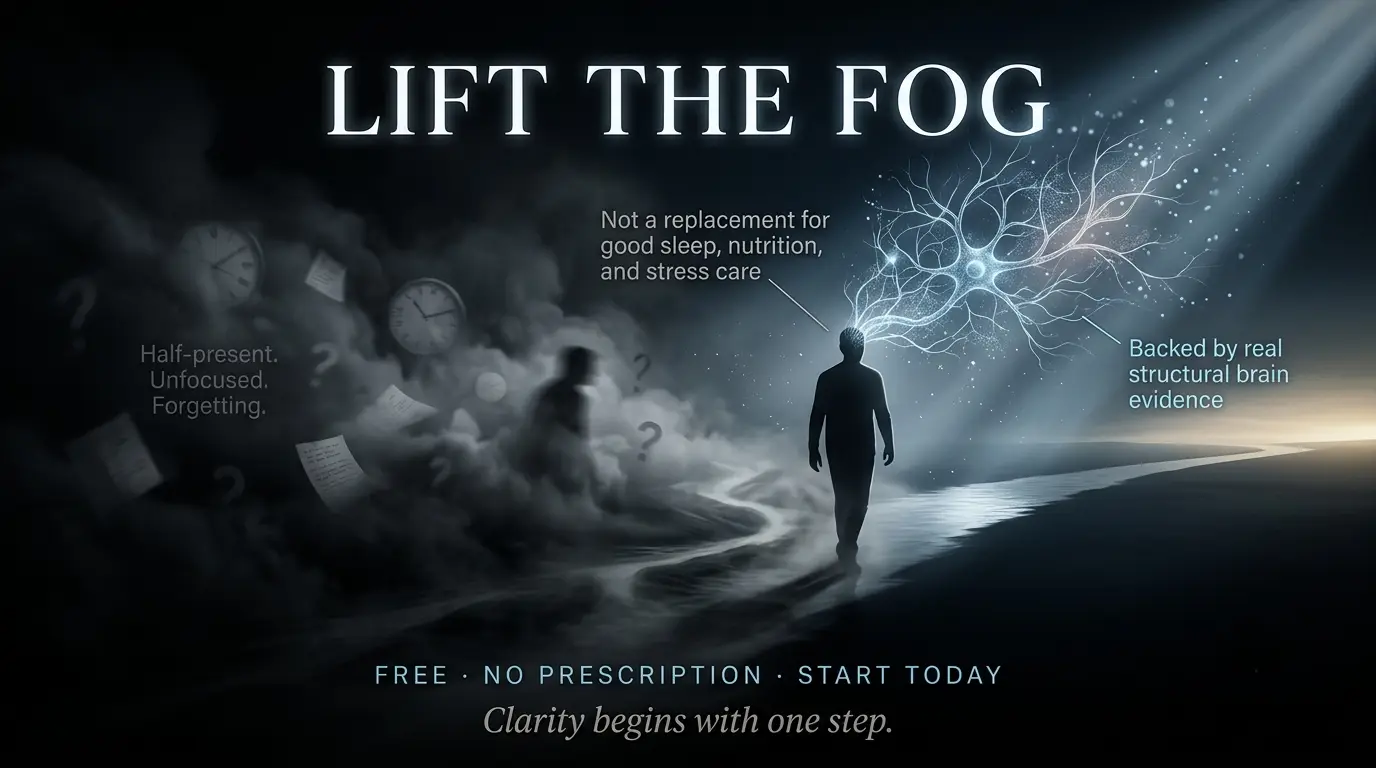
    If you’ve ever dealt with mental fog — that feeling of moving through your day half-present, unable to focus, forgetting things you’d normally remember easily — this research offers a genuinely useful, non-pharmaceutical starting point.

    How Much and Which Exercise Is Actually Required?

    This is the part people usually expect to be complicated, and it isn’t. In the UBC research, participants walked briskly for one hour, twice a week — about 120 minutes of moderate-intensity activity weekly.

    That’s close to the standard public health recommendation of roughly 150 minutes of moderate activity a week, or about half an hour most days.

  • The Real Cost of India’s Coaching Culture: How JEE/NEET Prep Is Silently Wrecking Students’ Health (And Nobody’s Talking About It)

    The Real Cost of India’s Coaching Culture: How JEE/NEET Prep Is Silently Wrecking Students’ Health (And Nobody’s Talking About It)

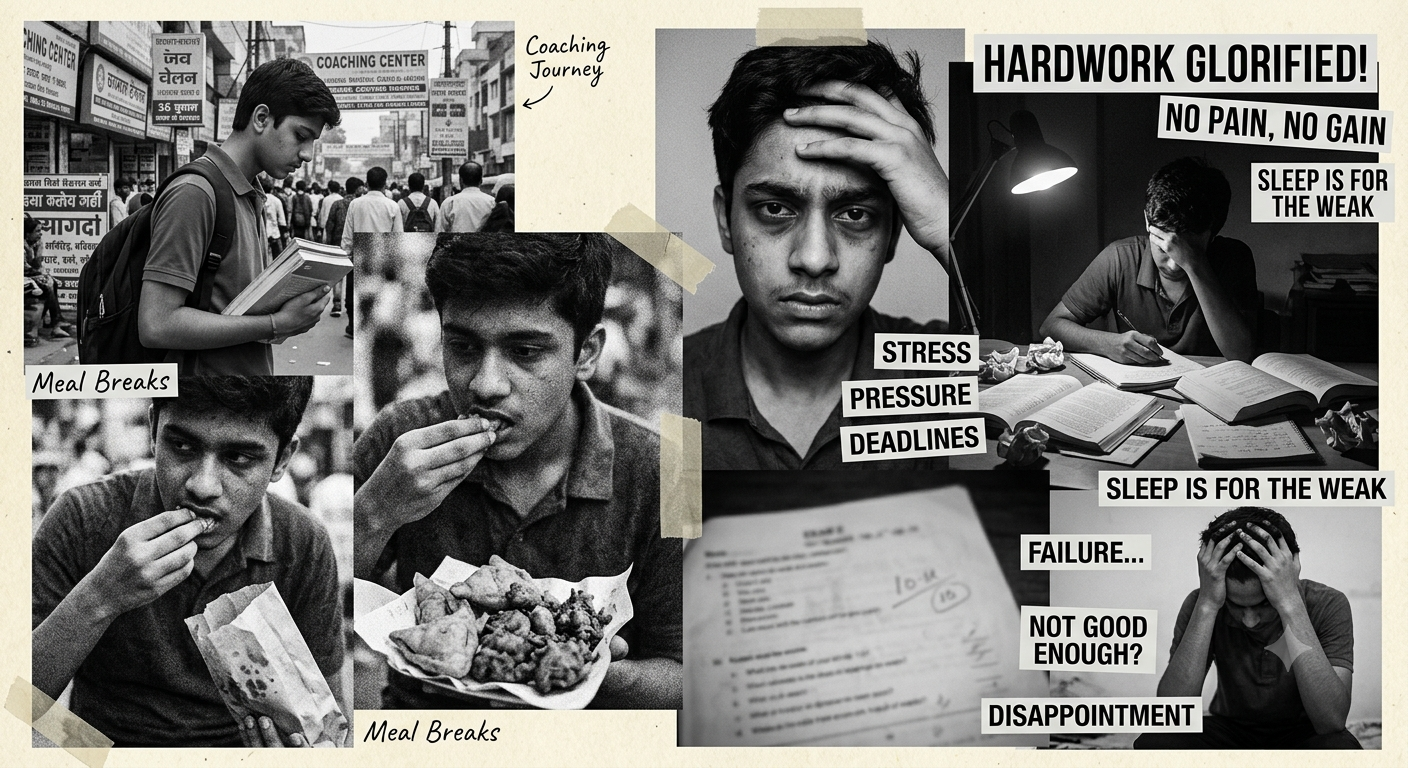
    Every year, lakhs of 16, 17, and 18-year-olds across India disappear into the same machine: wake up at 5 AM, coaching class, mock tests, more coaching, home, sleep, repeat. We call it “dedication.” We call it “the sacrifice you make for your future.” What we rarely call it — even though it is — is damage.

    I know, because I lived it.

    The Story Nobody Puts in the Success Reels

    In 2019, I was 18 and prepping for JEE like every other kid in my batch — chasing a rank, chasing a college, chasing a version of “success” that was handed to me before I even knew what I wanted. Somewhere in that pressure, my body started giving me warning signs. I was losing hair in clumps. At 18. I didn’t even have the vocabulary to understand that this was my body reacting to chronic stress — I just thought something was medically wrong with me.

    A government doctor prescribed me a cocktail of medicines and Minoxidil without asking a single question about why an 18-year-old was losing hair. No one asked about sleep. No one asked about stress. No one asked about diet. The system isn’t built to ask — it’s built to push you toward the next mock test.

    I didn’t qualify JEE in my first attempt. And what followed wasn’t just disappointment — it was a depression I didn’t have language for, that took roughly four years to fully claw back from.

    I’m not telling you this for sympathy. I’m telling you because I know I wasn’t the only one.

    What the Coaching Culture Doesn’t Tell You

    1. Hairfall and skin issues are extremely common — and rarely investigated properly

    Chronic stress disrupts your hormonal balance and nutrient absorption, which shows up physically — hairfall, acne, fatigue — long before it shows up as a diagnosable “mental health issue.” Most students (and most doctors treating them) chase the symptom with a cream or a tablet instead of asking what two years of 14-hour days and constant testing anxiety is doing to a still-developing teenage body.

    2. Sleep deprivation is treated as a badge of honor

    “I slept 4 hours and revised till 2 AM” is said like a flex in almost every coaching WhatsApp group. It’s not discipline — it’s a recipe for burnout, poor memory retention (ironically, the opposite of what you need for an exam), and long-term health consequences that don’t announce themselves until years later.

    3. Nutrition is an afterthought

    Between coaching, tuition, and self-study, meals get skipped, rushed, or replaced with whatever’s fastest. Deficiencies build silently — iron, B12, Vitamin D — the kind you don’t notice until a random blood test years later explains why you’ve felt foggy, tired, and low for so long. (I found out mine the hard way — you can read that story here if you haven’t already.)

    4. One failed attempt is treated like a life sentence

    Not qualifying on your first attempt gets treated — by the system, by relatives, sometimes by yourself — like the story is over. It isn’t. But at 17 or 18, with no framework for processing failure, that message can trigger a spiral that has nothing to do with your actual potential and everything to do with how narrowly “success” was defined for you.

    5. There’s no aftercare — win or lose

    If you crack the exam, you’re immediately expected to move on and “perform” at the next level. If you don’t, you’re often just… left. No one checks in on the mental toll either way. The system optimizes for the exam, not for the human being who took it.

    What I Wish Someone Had Told Me at 18

    • Your worth is not your rank. I know that sounds like a poster on a counselor’s wall, but it’s true, and nobody says it while you’re in it — only after.
    • Physical symptoms are data, not distractions. If your body is giving you warning signs — hairfall, exhaustion, appetite changes — it’s not weakness, it’s information. Get it checked properly, don’t just medicate the symptom.
    • Rest is not the enemy of preparation. A tired brain doesn’t retain information well. Burnout doesn’t make you more competitive — it makes you less capable, right when you need to be at your sharpest.
    • One outcome does not define the next ten years. I didn’t qualify JEE the first time. I qualified the second time. Neither outcome was the full story — the four years after mattered just as much as the exam itself.

    What Needs to Change

    This isn’t a rant against ambition or hard work — I still believe in both. It’s a call for coaching institutes, parents, and students themselves to stop treating physical and mental health as optional extras to “deal with later.” Later often turns into years of recovery that could’ve been avoided with a little honesty during the process instead of after the damage is done.

    If you’re a student going through this right now: check in with your body. Get bloodwork done if something feels off — don’t wait years like I did. Talk to someone, even if it’s just a friend, instead of sleeping through the discomfort like I did.

    If you’re a parent: ask your kid how they’re doing, not just how their mock test score was.

    Final Thought

    Suffering is part of chasing something big — that part’s unavoidable. But suffering silently, without anyone naming what’s actually happening to you, is avoidable. I wish someone had named it for me at 18. I’m naming it now, for whoever needs to hear it.

  • How I Regrew My Hair After Losing It to Stress, Depression, and Vitamin Deficiency (My 4-Month Comeback)

    How I Regrew My Hair After Losing It to Stress, Depression, and Vitamin Deficiency (My 4-Month Comeback)

    By Aditya Dev Ranjan

    If you’re losing hair in your late teens or twenties and doctors keep handing you Minoxidil without ever asking why — this post is for you. This isn’t a “5 hacks for hair growth” post. This is my actual story, the mistakes I made, and what finally worked.

    Where It All Started: JEE Prep, 2019

    I was 18, deep in my JEE preparation, and more stressed than I’d ever been in my life. Somewhere in that pressure-cooker year, I started noticing clumps of hair coming out. For an 18-year-old, losing hair isn’t just a cosmetic problem — it’s terrifying. It messes with your confidence at exactly the age when you’re figuring out who you are.

    The Mistake: Medicine Before Diagnosis

    My mother and I went to a government doctor, hoping for answers. Instead of investigating the actual cause, he prescribed a bunch of medicines along with Minoxidil — for an 18-year-old, without ever checking what was causing the hairfall in the first place.

    I didn’t know any better, so I used it. Three months in, my hairfall got worse, not better. And on top of that, coming from a middle-class family, that ₹500 bottle of Minoxidil plus the other medicines was costing me close to ₹3,000 a month — money we genuinely couldn’t spare. I quit.

    Lesson #1: Hairfall is a symptom, not a disease. Treating the symptom without finding the root cause rarely works — and it can cost you more than money.

    When Everything Fell Apart

    Around the same time, I didn’t clear JEE in my first attempt. That hit me hard. I slipped into a depression I didn’t even have a name for back then — I just wanted to disappear from reality, so I slept. Day into night into day again.

    Then COVID happened, and I moved back to my village, where family issues piled on top of everything else. In the middle of all that chaos, I somehow managed to qualify JEE and get into an architecture program — but the mental damage from that one year took nearly four years to fully recover from.

    By the last years of college, I started gymming. I built a decent physique in about six months — but I was hollow on the inside. The body had changed; the mind hadn’t caught up.

    The Turning Point: A Blood Test I Almost Didn’t Take

    After graduating, my brother was getting a blood test done for a deficiency check, and I decided to tag along and get mine done too. That single decision changed everything.

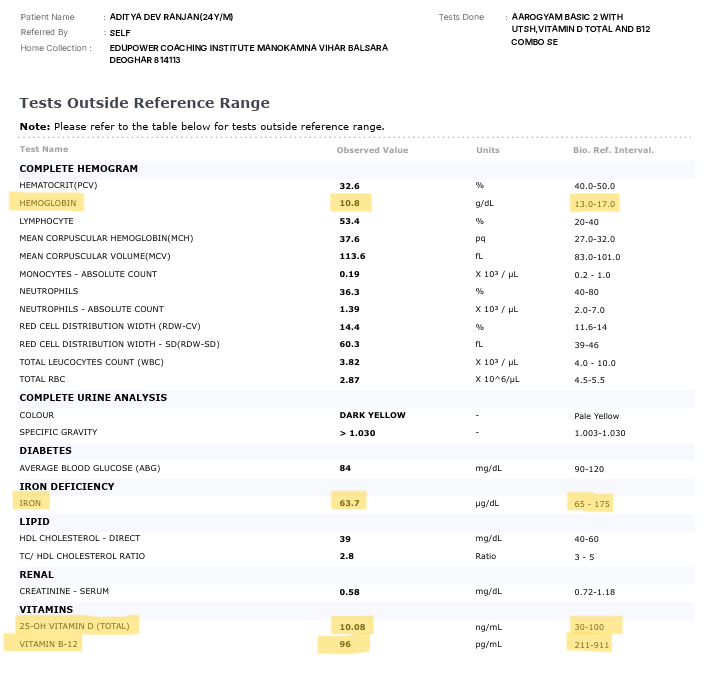
    My report came back with:

    • Mild anemia — hemoglobin at 10.8 g/dL
    • Low Vitamin D
    • Severely low Vitamin B12 — 96 pg/mL, against a healthy range of 211–911 pg/mL

    Suddenly, years of hairfall, fatigue, and brain fog had an actual, physical explanation. This wasn’t just “stress” — my body had been running on empty for years.

    Taking My Life Back: The Routine That Worked for Me

    I got a decent job, joined a gym, and instead of throwing random medicines at the problem again, I started learning how nutrients actually work together. That was the real shift — understanding that:

    • Magnesium needs K2
    • Vitamin D needs magnesium
    • Iron needs Vitamin C
    • Calcium needs Vitamin D

    Everything in the body is interrelated. Popping one supplement in isolation rarely fixes anything.

    My typical day now looks like this:

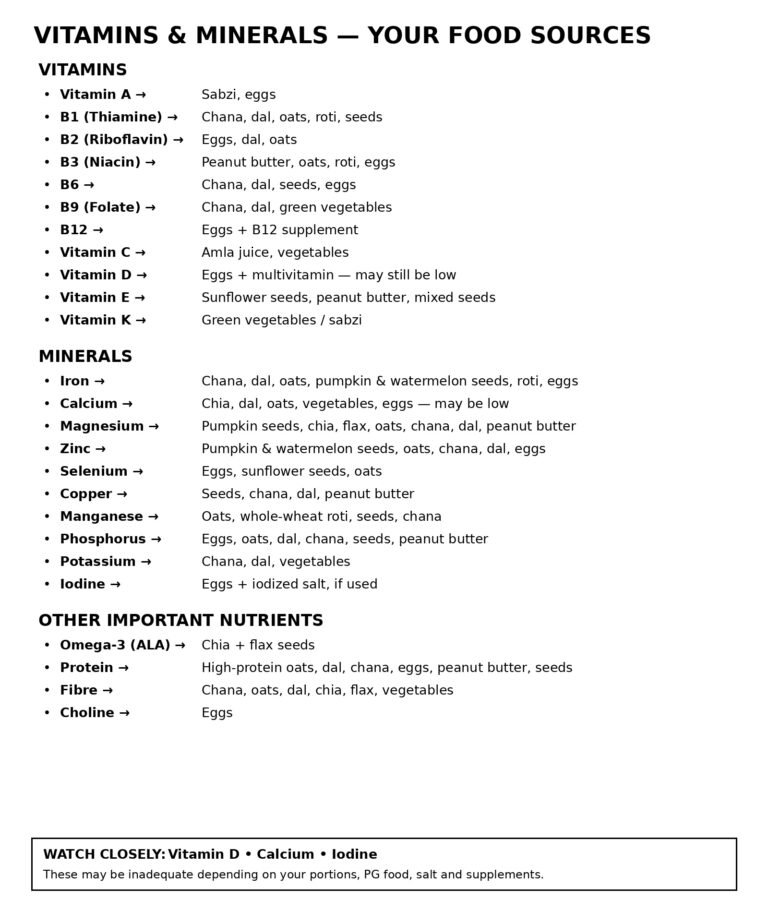
    • Morning: Vitamin C first — usually amla juice — plus soaked brown chana (overnight, with jaggery)
    • Pre-gym: Creatine
    • Post-gym breakfast: Roti and sabzi, a scoop of good-quality peanut butter, and a handful of mixed seeds (pumpkin, watermelon, sunflower, chia, flax)
    • Lunch: Rice, dal, sabzi, and 100g of high-protein oats (roughly 54g of protein on its own)
    • Evening: 3–4 eggs
    • Dinner: Regular PG food
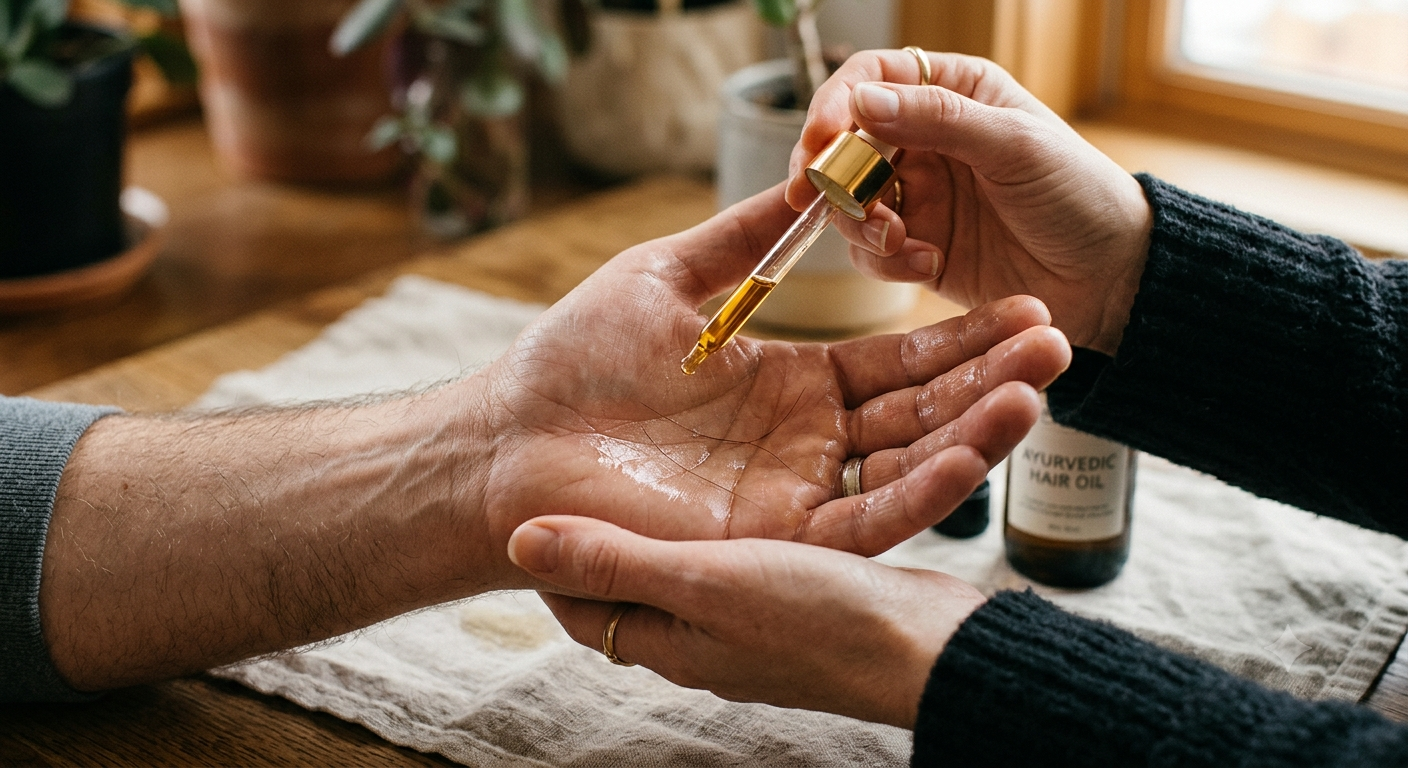
    • Alongside this: a multivitamin every alternate day and a B12 supplement, based on what my blood work showed I was deficient in

    (Quick disclaimer: this is what worked for me, based on my own blood test results — not a prescription for anyone else. Please get your own bloodwork done and talk to a doctor before starting any supplement routine.)

    Where I Am Now — 4 Months In

    I started this routine in May 2026, so this is about four months of consistency. I’m not “fully recovered” — hair regrowth takes time — but here’s what has changed:

    • My mental health has improved massively
    • I feel genuinely happier
    • My cognitive ability is sharper
    • I feel full of life again, not just physically but mentally

    The Real Takeaway

    If your hairfall is tied to stress, depression, or a deficiency your body’s been quietly screaming about — chasing shampoos and Minoxidil without checking the actual cause is often just throwing money at a symptom. Get your bloodwork done. Fix the body and the mind together. The hair often follows.

    Suffering is part of being human — that’s not the part you get to choose. But how you respond to it? That part is yours.

    I’ll see you in the next vlog, where I talk about how I dealt with depression and brain fog — no therapy, just self-work. Till then, this is Aditya Dev Ranjan. Bye.


    This post is based on personal experience and is not medical advice. Please consult a doctor and get proper bloodwork done before starting any supplement or medication routine